


 4 Min
4 Min
In Analysis

Bookmark
If you pay any attention to social media, you’ll know that peptides are having a moment. But what are they, and what are they supposed to do?
Peptides are short chains of amino acids, smaller and simpler than proteins. The body produces its own peptides in order to keep all sorts of everyday processes running. For instance, insulin, glucagon, oxytocin and growth hormone-releasing hormone (GHRH)are all peptides, and between them they help to regulate blood sugar, appetite, tissue repair, immune response and dozens of other functions.
While animal-derived peptides are found in some products, the peptides found in medicines and most other consumer products are synthetic or lab-made molecules. They may have the same effects as the body’s own peptides, or they may have been engineered to be stronger or last longer.
Because peptides act as chemical messengers, even tiny amounts can have a noticeable effect, which is why using them outside of a clinical need is not as low risk as social media might make it sound.
Some peptide-based medicines are already familiar in pharmacy: insulin is the obvious example, and the GLP-1 receptor agonists semaglutide and tirzepatide, used for diabetes and weight management, are also peptides. However, these are licensed medicines that have been through rigorous clinical trials and are manufactured to strict quality standards. They are only available on prescription, with dosing tailored to the individual and monitored by a healthcare professional.
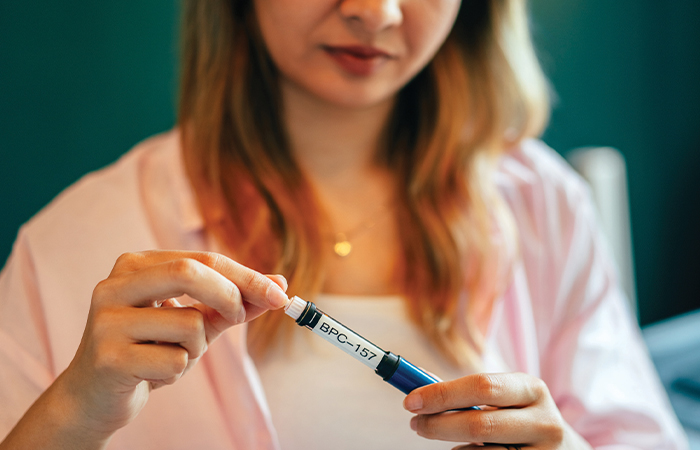
What’s new is the emergence of an entirely different category of synthetic peptide products, promoted heavily by influencers, biohackers and some private clinics as “research peptides” offering an easy route to rapid fat loss, faster muscle recovery and a more youthful appearance. Names such as BPC-157, CJC-1295, ipamorelin and melanotan can be found on TikTok and Instagram, often alongside dosing charts, injection tutorials and testimonials. Sellers are careful to market them as “not for human consumption” in a bid to sidestep medicines regulation, even though images related to the products are aimed at people who intend to inject them.